

Skills + Wellness
Learn How to Manage Your Time as a University or College Student
Managing your time as a student can feel overwhelming
Between classes, assignments, extracurricular activities, work, and trying to maintain a social life, it can quickly feel like there aren’t enough hours in the day. Learning time management is one of the most valuable skills you can develop, not just for school, but for life.
Here are 5 things you can do to learn to manage your time in school.
1. Break large tasks into smaller ones
If you are given an assignment for school, break down that task into smaller, more manageable steps. Instead of adding “complete assignment” to your to-do list, add “pick topic”, and then as a separate task add “write opening paragraph,” etc.. Breaking large assignments or projects into smaller, more manageable steps can make them feel much less overwhelming. This approach also makes it easier to plan your time. Rather than trying to complete everything in one sitting, you can spread the work over several days or weeks, reducing last-minute stress and giving yourself enough time to produce your best work. Small, consistent progress is often more effective than trying to finish everything at once. Also, how fun is it to cross off things on your to-do list!
2. Understand where your time goes
Do you constantly feel busy but never understand where all the time goes? It could be surprising knowing how you actually use your time once you break it down. For a few days (or even just one average day), keep track of your daily activities, including classes, studying, work, meals, commuting, socializing, exercise, and time spent on your phone or watching TV. Once you’ve done this, look for patterns in your schedule. Do you spend most of your free time scrolling social media? Does your commuting hours take up more time than you realize?
Identifying these habits can help you understand what’s helping (or hurting) your productivity. From here, you can make adjustments to better organize your time. How can you replace scrolling time with something more productive? Can you spend your commute multi-tasking?
Tips:
- Try listening to a lecture, podcast, or study notes while commuting
- Limit your access to social media through your phone’s settings
- Challenge yourself to 5,000+ steps every day
This doesn’t mean you have to eliminate all of your free time. Relaxing, spending time with friends, and enjoying your hobbies are all important parts of maintaining a healthy balance. The goal is simply to become more aware of how you’re using your time so you can make intentional choices about where it goes.
3. Set SMART goals
SMART = Specific, Measurable, Achievable, Relevant, Time-bound.
If you haven’t heard this acronym, it is about learning how to set yourself up for success by creating goals you can actually achieve. This becomes especially relevant when it comes to managing your time in school.
Example: You have to study for a biology exam scheduled for May 1st
April 1st – one month before the exam your goal may look like:
- Create a study guide including the 10 major topics by April 7th
April 10th – three weeks before the exam your goal may look like:
- Review topics 1-5 and create summary notes by April 23rd
April 17th – two weeks before the exam your goal may look like:
- Review topics 6-10 and create summary notes by April 23rd
April 24th – one week before the exam your goal may look like:
- Complete all practice exam questions by April 30th
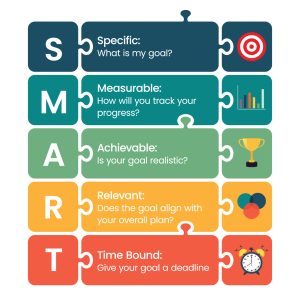
SMART goals can also help you manage your workload throughout the semester. At the beginning of each week, identify the most important tasks you want to complete and assign realistic deadlines. As you accomplish your goals, you’ll build confidence and develop positive habits that make managing your time feel more natural.
4. Schedule breaks
Having good time management doesn’t always mean being busy 24/7 – in fact that’s exactly how you burn out. When you’re trying to stay on top of assignments and prepare for exams, it can be tempting to study for hours without stopping. However, working continuously for long periods often leads to mental fatigue, making it harder to concentrate, retain information, and stay motivated.

Rather than waiting until you’re completely exhausted, plan short breaks into your study schedule. A common study schedule includes studying for 50 minutes before taking a 10 minute break. Use your breaks intentionally. Step away from your desk, stretch, go for a short walk, refill your water bottle, have a healthy snack, or simply give your eyes a rest from your computer screen.
Scheduling breaks isn’t just about giving yourself time to rest but also helps create flexibility in your day. Building short breaks or buffer time into your schedule gives you room to adapt when these situations arise without throwing off your entire day. Having this flexibility can help reduce stress and make it easier to stay on track, even when unexpected interruptions occur.
5. Build a routine
Eventually as these tricks become more natural to you, so will a routine. You’ll become an expert on how to space your study time out or how to find flexibility in your schedule for unexpected interruptions. In the meantime, build a routine for yourself to learn how to organize your time until it becomes second nature. Unlike high school, where your days often follow a set schedule, university gives you much more freedom to decide how you spend your time. While this flexibility can be exciting, it also means you’re responsible for managing your own schedule.
a. Start by creating an everyday to-do list:
- List by importance, and work your way through by your ranking
- Leave room for flexibility in your list for what could potentially be pushed into the next day
- Think ahead when thinking of what you want to accomplish
b. Use a calendar:
- At the beginning of the semester, input all of your important assignment/test dates
- Regularly update throughout the semester as you are given new details
- Give yourself a good overview and understanding of your upcoming deadlines and responsibilities
c. Learn how to prioritize:
- Identify which tasks are the most important (size of assignment, weight of project, time it will take to complete, etc.)
- Give way for things that may be more important (for example skipping a social outing to study for an exam you have)
- Learn how to dedicate time to what deserves it most
Remember that your routine doesn’t have to be rigid. University schedules can change from week to week, especially during midterms, finals, or busy assignment periods. Instead of aiming for a perfectly structured day, create a routine that provides consistency while still allowing for flexibility when unexpected commitments arise.
Be patient with yourself
Learning to manage your time effectively doesn’t happen overnight. Like any new skill, it takes practice, consistency, and a willingness to learn from your experiences. University is a significant adjustment for many students. You’ll likely be managing a heavier workload, more independence, and greater responsibility than ever before. It can take time to figure out the study habits, routines, and planning methods that work best for you. What works for one student may not work for another, so don’t be discouraged if it takes some trial and error to develop a system that fits your lifestyle.
In the end, the goal of time management is not to plan every minute of your day perfectly, but rather to create habits that help you stay organized, reduce stress, and make time for the things that matter most. By breaking large tasks into smaller steps, understanding where your time goes, setting SMART goals, scheduling breaks, building a routine, and learning how to prioritize, you can take more control over your schedule and your workload.
These strategies won’t just help you succeed academically – they are skills that will continue to benefit you throughout your personal and professional life. University is about more than just completing assignments and earning grades; it’s also about learning how to balance responsibilities, take care of yourself, and build habits that support your future. Start small, stay consistent, and over time, managing your time will become a skill you can rely on.